Bedding · Adjustable bases
How Obasan Latex Layers Respond to Adjustable Bases
An adjustable base changes the shape of a mattress, not simply the height of the bed. For an Obasan latex mattress—or any layered latex design—the important questions are how the layers are assembled, how freely they bend, and whether the mattress and base manufacturers approve the combination.
Published November 5, 2026
The promise of an adjustable bed is easy to understand: raise the head to read, elevate the legs to relax, or settle into a position that feels more comfortable than lying flat. The mechanics beneath that promise are less visible. As the base moves, it articulates at particular points, asking the mattress above it to bend, flex and remain supported while doing so.
That makes mattress construction central to the decision. “Latex” is useful information, but it is not a complete compatibility verdict. Latex mattresses differ in layer thickness, firmness, cover design, quilting, internal connections and overall weight. An Obasan mattress should therefore be evaluated by its specific model and construction, not by material label alone.
The practical approach is measured rather than dramatic: check the manufacturer’s guidance, identify the mattress’s layers and support requirements, inspect the adjustable base’s movement range, and test any approved combination gently. This guide explains what to look for—and what not to assume—before changing a sleep setup.
What happens when a base articulates?
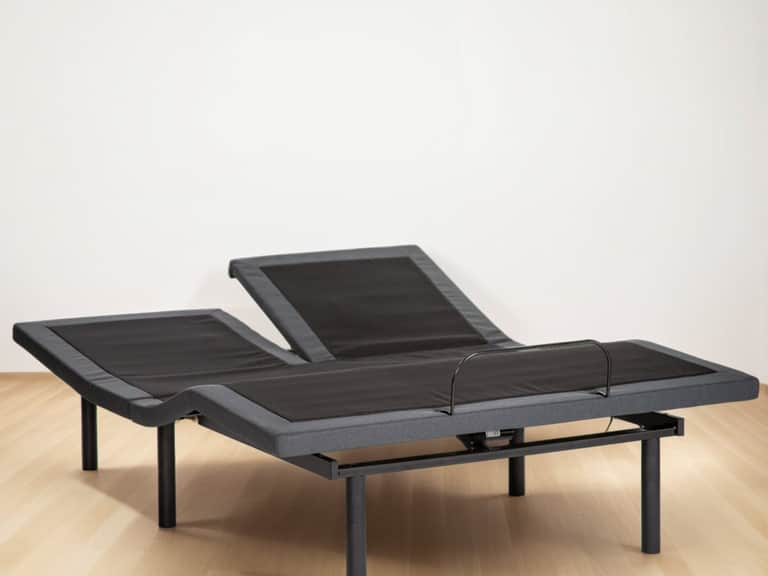
A flat foundation supports a mattress across a relatively even plane. An adjustable base replaces that plane with sections that can rise or lower, commonly at the head and foot. The mattress must follow those changes while staying in contact with the support surface. At the joints, it bends; across the rest of the bed, it distributes the forces created by the new position.
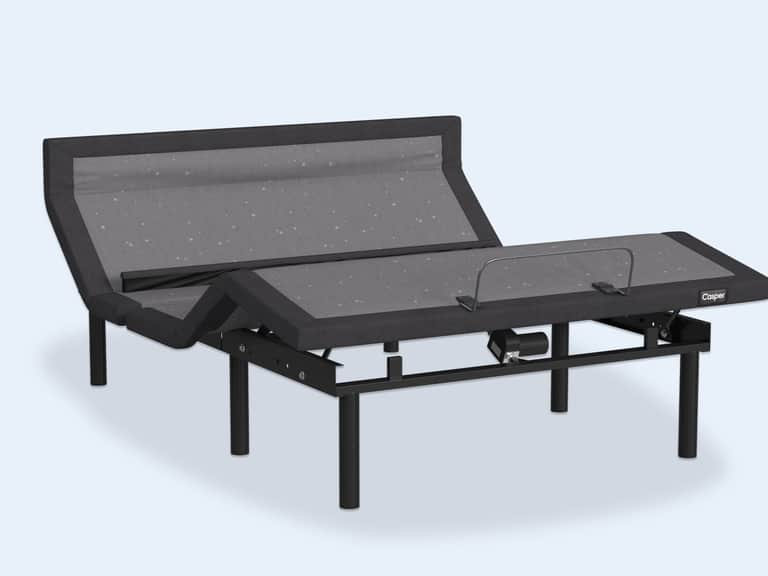
In a head-up position, the mattress curves near the upper articulation point. With the foot raised as well, another bend develops lower down. The exact location and severity of those curves depend on the base’s design, its travel, the sleeper’s position and the mattress dimensions. A split configuration may introduce separate movement on each side, adding another consideration for couples and their bedding.
Latex is generally known for resilience and the ability to compress and recover. That quality can help a latex mattress respond to changes in position, but it does not guarantee that every latex mattress works with every adjustable base. A thick, tightly quilted cover or a construction with layers that are not intended to move independently may behave differently from a flexible, unquilted design. The whole mattress matters: core, comfort layers, cover and assembly.
Nor is the question merely whether a mattress can bend once. Compatibility also concerns repeated movement over time. The mattress must remain properly supported, return to its intended shape, and avoid shifting or bunching during ordinary use. Only the relevant manufacturers can confirm whether a particular pairing is approved under their specifications and warranty terms.
Why latex layers deserve a closer look
Layered latex mattresses are built from materials selected for different roles. A comfort layer may provide a softer initial feel; deeper layers may contribute firmer support. The arrangement can influence pressure distribution and the way the bed feels beneath the shoulders, hips and legs. But the same layered construction also shapes how the mattress responds when its surface is no longer flat.
Some mattresses use separate layers that can be rearranged or replaced. Others have layers enclosed in a cover that holds the mattress together as a single unit. Layer independence may be useful for customization, but it should not be mistaken for a promise that the layers will stay aligned on an adjustable base. Cover tension, mattress design and the base’s movement all play a part.
With an Obasan latex mattress, begin with the exact model name and current product documentation. Confirm the order and type of its layers, whether the cover is designed to flex with articulation, and whether the manufacturer lists adjustable bases as an approved foundation. If the mattress has been customized, include those details in the question. A general answer about latex may not apply to a particular configuration.
Also note the mattress’s age and condition. A new mattress and one that has developed sagging, damage or a loose cover are not equivalent test cases. Existing wear can make movement less predictable, while a mattress that is still under warranty may be subject to specific foundation requirements. Keep records of any guidance you receive.
- Layer design: Ask what the layers are made of, how thick they are, and how they are held in place.
- Cover construction: Find out whether quilting, fabric tension or other components limit bending.
- Mattress dimensions: Confirm that the specific size is supported by the base and is appropriate for its configuration.
- Warranty conditions: Check which foundations are permitted and whether a powered base affects coverage.
Start with the manufacturer, not a guess
The first compatibility check should be a direct one. Consult the current documentation for both the mattress and the base. If the guidance is unclear, contact the manufacturers or authorized sellers before installation. Ask about the exact mattress model, size and configuration, rather than asking whether “latex mattresses” in general can be adjusted.
A useful inquiry is specific: “Is this Obasan model, in this size and layer configuration, approved for use on this adjustable base?” Add the base model, whether it is a standard or split setup, and how the mattress is currently supported. If a retailer supplied the mattress or base, ask whether the recommendation is based on manufacturer approval or general experience. Those are not the same thing.
Look for instructions on support surfaces, slat spacing, center support and mattress retention. Adjustable bases vary. Some use a platform-like deck; others have a different support structure. They can also vary in head-and-foot movement, articulation points, stop positions, and features such as pillow tilt. The specifications that matter are those for the actual base, not a similar model from the same brand.
When a base has more than one movement feature, ask whether each is allowed with the mattress. A base that raises the head and foot may work differently from one with an additional tilt mechanism. More motion is not automatically better for mattress compatibility; the manufacturer’s limits should guide the choice.
One available example is the The Clean Bedroom (Level 2) Adjustable Bed Base, which offers independent head and foot adjustment. Its listed features describe the base, not its approval for use with an Obasan mattress. Confirm compatibility for the exact mattress and base combination before purchase or use.
Inspect the base’s movement range
“Adjustable” can describe a wide range of motion. A base may lift the head and feet independently, offer preset positions or include additional adjustments. The greater the articulation, the more important it is to understand where the mattress bends and how the base supports it. A modest incline and a pronounced curve are not interchangeable conditions.
Check the base’s weight limits, mattress-size requirements and installation instructions. Include the weight of the mattress and sleepers when assessing the limits, and consider whether a headboard, footboard or existing frame affects clearance or movement. A base intended to sit inside a bed frame may need a different setup from one used as a standalone unit.
For split configurations, establish whether the mattress is one continuous piece or two separate mattresses, and how the base is designed to move each side. A single mattress spanning independently moving sections can experience different forces from a pair of mattresses in a split arrangement. The base maker’s instructions should clarify what is intended.
Practical details matter, too. Confirm that the mattress remains centered as the base moves and that any retaining bar or other restraint is installed as instructed. Avoid improvised straps or modifications unless the manufacturer specifically permits them. A restraint that is too tight or positioned incorrectly may interfere with movement or put unnecessary stress on the mattress cover.
A careful test, if the pairing is approved
If both manufacturers allow the combination, a restrained test can help reveal how the setup behaves in everyday use. Begin with the mattress properly placed on the base, with bedding removed or loosely arranged so it cannot snag. Check that the power supply, cords and moving parts are clear, and follow the base instructions for operation.
Start from flat and make a small head adjustment. Pause to observe whether the mattress follows the base smoothly, remains centered and maintains contact with its support surface. Return to flat before testing a small foot adjustment. If the base permits simultaneous movement, try that only within the manufacturer’s recommended range. There is no need to push the system to its maximum angle just to see what happens.
Pay attention to unusual movement: a layer visibly shifting, the mattress sliding, a cover pulling tight, a section lifting away from the deck, or the base moving unevenly. Stop if anything appears strained or if the base makes an unfamiliar sound. Do not force the mattress into a position or sit heavily on a raised edge to test it. Contact the manufacturer if you are uncertain about what you observe.
Repeat the check with normal bedding in place. Fitted sheets, mattress protectors and blankets can restrict movement if they are too tight or not sized for the bed’s configuration. For a split setup, sheets should not bridge independently moving sections in a way that pulls against either side. If pillows or accessories are attached to the bed, make sure they do not obstruct motion.
This is a functional check, not a substitute for approval. A mattress that appears to bend without immediate difficulty is not necessarily warranted for that use. Written compatibility guidance should come first.
Comfort, posture and expectations
An adjustable position can change how a person experiences a mattress. Raising the head or feet shifts contact and pressure across the body, and a familiar mattress may feel different when it is inclined. Someone who enjoys a particular position while reading may prefer a lower angle for sleep. Finding a comfortable setting is personal; it does not demonstrate that the mattress is medically suitable for a condition.
People with persistent pain, circulation concerns, breathing problems or other health questions should seek individualized advice from a qualified healthcare professional. An adjustable base is a positioning tool, not a treatment by itself. Neither latex construction nor a particular preset position should be treated as a medical claim.
Give bedding and pillows a role in the assessment. A head elevation changes the relationship between the neck, shoulders and pillow. A body pillow may shift or compress differently on an incline. If the setup feels awkward, try a smaller approved adjustment and reassess rather than assuming the mattress is at fault—or raising the bed farther.
Questions to ask before changing your setup
A short checklist can make a conversation with a seller or manufacturer more productive. Collect the details before calling: the Obasan model and size, its layer configuration, approximate age, the adjustable base model, and whether the base is split or has additional tilt functions.
- Does the mattress manufacturer approve this exact mattress model and size for adjustable-base use?
- Are there restrictions on head or foot elevation, articulation range, or use of additional tilt features?
- Does the mattress warranty require a particular foundation or support design?
- Does the base maker list limits for mattress thickness, weight, dimensions or construction?
- Are separate or rearrangeable latex layers held securely enough for the recommended movement?
- Does the base require a retainer bar, and where should it be installed?
- Will a frame, headboard, footboard or split arrangement affect clearance or operation?
- Can the recommendation be provided in writing for future reference?
Common assumptions to avoid
“Latex always works on an adjustable base.” Latex’s resilience can be a helpful characteristic, but the finished mattress is a system. Layer construction, cover design, dimensions and support requirements still matter.
“If it bends, it is compatible.” A brief movement test cannot establish long-term durability or warranty eligibility. Use the manufacturers’ specifications as the authority.
“All adjustable bases move the same way.” Bases differ in their sections, movement range, deck design and features. Confirm the model rather than relying on a category label.
“A mattress protector cannot affect movement.” A tight or poorly fitted protector can pull against a mattress as the base articulates. Choose accessories that fit the bed and follow the product instructions.
“A no-cost trial period answers every question.” Comfort trials, return terms and warranties are separate policies. Read each one, especially when a mattress is used on a powered base.
The bottom line
Obasan latex layers should be considered in the context of their complete mattress construction. Latex may flex and recover, but that broad material characteristic does not settle compatibility with an adjustable base. The mattress model, cover, layer arrangement, base movement and warranty terms all influence the answer.
Before making a change, identify the exact products, read current documentation and ask both manufacturers about the pairing. If it is approved, follow the base instructions and begin with gentle movements, watching for shifting, strain or uneven support. A careful check can help make a new setup more predictable—but the clearest signal remains explicit, model-specific guidance.
In the end, a well-matched adjustable bed is not defined by how far it can rise. It is defined by whether its components are designed to move together, support the mattress as intended and offer a position that suits the sleeper without compromising the setup.